
Afghanistan
Deployment
WW2 August Newsletter
Vietnam Photos
from Ron Rutledge
Fort Devens '60s
Fort Campbell






20th Engineer Regiment 1917-1944
20th Engineer Battalion 1944-Present
Use the index bars to the left to view histories, images, and memoirs from every era from the establishment of the 20th Engineers during World War I to their current deployment to Afghanistan.
20th Engineers Celebrates its 100th Anniversary
Celebrations and ceremonies in France mark the contributions of Forestry troops from the United States and Canada





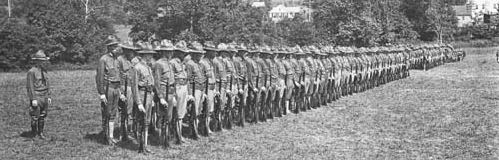
The regiment was spread across France, from the front lines opposite the German Army, to the mountains on the Spanish border, conducting forestry operations. The regiment demobilized upon its return to the U.S. in July 1919.
The regiment was reactivated in July 1940 at Fort Benning, Georgia, for World War 2. In July 1942, after completion of its combat training and after helping construct Camp Shelby, Mississippi and Camp Beauregard, Louisiana, the 20th Engineer Regiment deployed to Casablanca, French North Africa. There the regiment cleared and secured port facilities, then fortified the hotel where President Roosevelt and Prime Minister Churchill met for the Casablanca Conference. The regiment next executed a motor march over 1,000 miles of desert to join the command of General Omar Bradley. In Tunisia, the regimental commander devised a coded directional marker, the Wavy Arrow, to mark all 20th Engineer equipment.
Follow the Wavy Arrow!
After the fall of Sicily, the regiment moved to Scotland and was reorganized. The regimental headquarters was redesignated Headquarters, 1171st Engineer Group; the 1st Battalion, 20th Engineer Regiment was redesignated the 20th Engineer Battalion; and the 2nd Battalion, 20th Engineer Regiment was redesignated the 1340th Engineer Battalion (now the 54th Engineer Battalion). The reorganized units then moved to England to prepare for the invasion of Normandy.
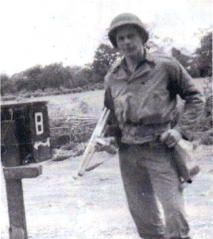
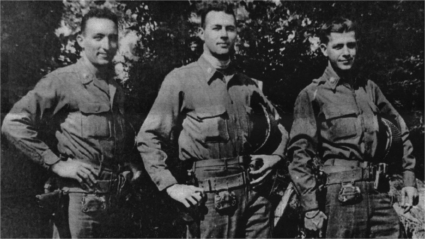
The 20th Engineers landed in the assault echelon of the 1st Infantry Division in support of the 16th Infantry Regiment on D-Day. For its efforts on Omaha Beach, the battalion was awarded the Presidential Unit Citation and the French Croix de Guerre. The battalion went on to fight across France, Belgium, and Germany with many different divisions in battles such as the Hurtgen Forest and Battle of the Bulge, and ended the war in Czechoslovakia. It inactivated in Frankfurt, Germany on 30 March 1946.
The battalion was reactivated on 18 September 1950 at Fort Bragg and moved to Fort Devens, Massachusetts in 1956. From Fort Devens, the battalion was redeployed to Germany from 1961 to 1963 in support of the Berlin Crisis. In 1966, troop ships deployed the battalion to Cam Ranh Bay, Vietnam.
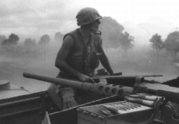
The 20th Engineers served in the 18th Engineer Brigade areas of operation throughout the war, at times reorganized as infantry. The battalion redeployed to Fort Campbell, Kentucky on 20 August 1971.
In October 1990 the battalion deployed to Saudi Arabia for Operation Desert Shield. Upon its arrival, the battalion quickly began conducting countermobility and survivability operations for the 101st Airborne Division and XVIII Airborne Corps Artillery.
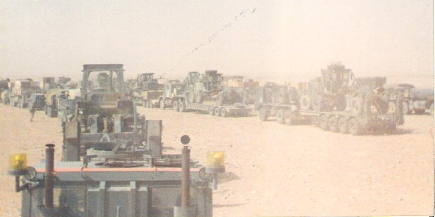
In Operation Desert Storm the battalion attacked 300 miles into Iraq, helping to secure the far western flank of the Allied assault. During the attack, the battalion constructed logistics bases, and cleared roads and towns of obstacles and unexploded ordnance. The battalion returned to Fort Campbell in April 1991.
In June 1992, the 20th Engineers moved to Fort Hood to reorganize and become part of the 1st Cavalry Division. In August 1994, the battalion deployed as a task force headquarters to fight forest fires in the Boise National Forest, Idaho.
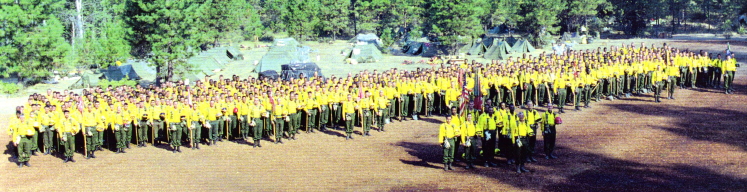
In the Fall of 1995, the battalion headquarters and Company C deployed with the 1st Brigade and 2-8 Cavalry to the mountains of Korea to participate in Operation Foal Eagle. The deployed soldiers trained Korean soldiers, learned the Korean landscape and culture, and honed their war-fighting skills. In February 1997, Company C again deployed, this time with the divisional cavalry squadron to Kuwait, as part of a mission to deter further Iraqi aggression.
In September 1998 the 20th Engineers deployed to Bosnia-Herzegovina as part of a NATO mission to conduct peacekeeping operations for Operation Joint Forge. The battalion conducted civil infrastructure reconstruction projects, reconnoitered areas for de-mining operations, and significantly contributed to maintaining the social stability within the respective ethnic sectors. Soldiers worked with both NATO and non-NATO allied forces in various projects such as bridge and route reconnaissance and bridge repair.
In August 2000, the battalion deployed to the Lolo National Forest in Montana to fight wildland forest fires. In December 2000, Company A deployed with Task Force 2-5 Cavalry for Operation Desert Spring in Kuwait.
In early 2004 the 20th Engineers, as part of the 1st Cavalry Division, deployed to Iraq as part of Operation Iraqi Freedom.
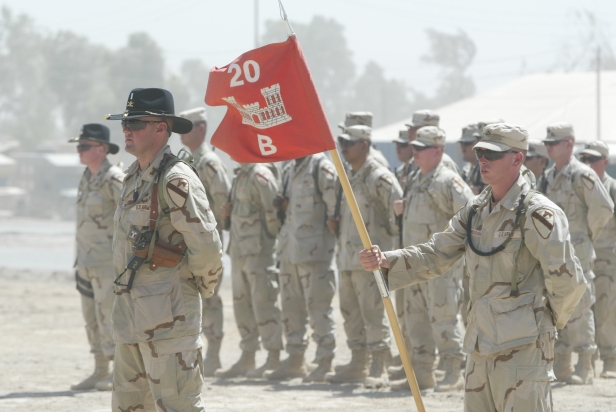
The battalion's area of operations included the capital city of Baghdad. The 20th Engineers conducted combat patrols, helped re-construct civic infrastructure, and cleared areas of munitions.
Upon its redeployment to Fort Hood in 2005, the 20th Engineer Battalion was relieved from the 1st Cavalry Division. It was broken up, with its headquarters used to build the Brigade Special Troops Battalion for 1st Brigade, 1st Cavalry Division; its line companies were assigned directly to infantry and armor combined-arms battalions, as the Company E of those battalions.
A "new" 20th Engineer Battalion was activated in February 2006 at Fort Hood. The battalion was transformed in accordance with the Army's new concept of modularity, with its only organic parts being a multi-functional headquarters and a forward support company for combat service support. The "line" companies assigned to the battalion were separately numbered engineer companies. The reorganized battalion was assigned to the 36th Engineer Brigade.
In late 2006 the 20th Engineers was deployed again to Iraq. The battalion operated in and around Baghdad under the command of the 1169th Engineer Group (Alabama National Guard), which functioned as the Engineer headquarters for the 1st Cavalry Division.
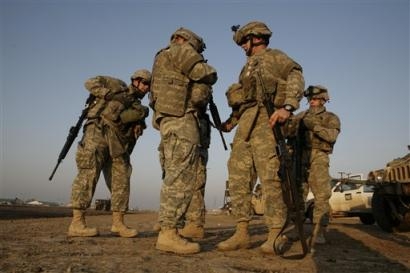
Major missions of the battalion included combat theater construction, construction of forward operating bases during the Surge, and anti-IED (improvised explosive device) operations. The 20th Engineers returned to Fort Hood in early November, 2007.
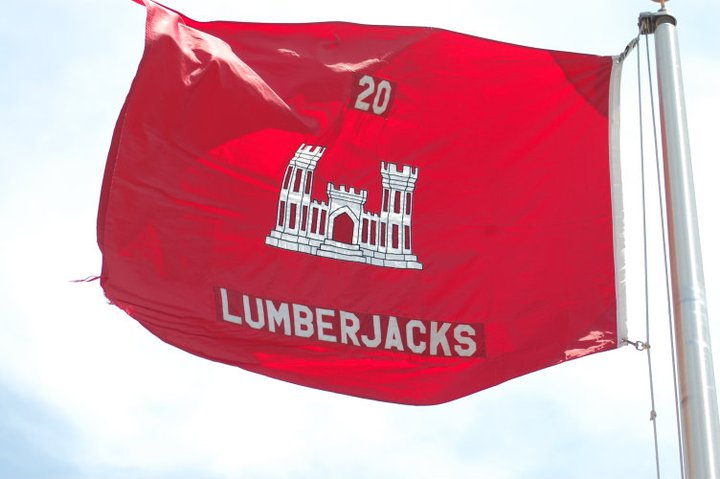
In January 2010 the 20th Engineers deployed to Kandahar Air Field, Afghanistan. The battalion was responsible for clearing routes and areas of explosive devices throughout southern Afghanistan, principally in the provinces of Helmand, Kandahar, and Zaboul. The Lumberjacks returned to Fort Hood in January 2011.
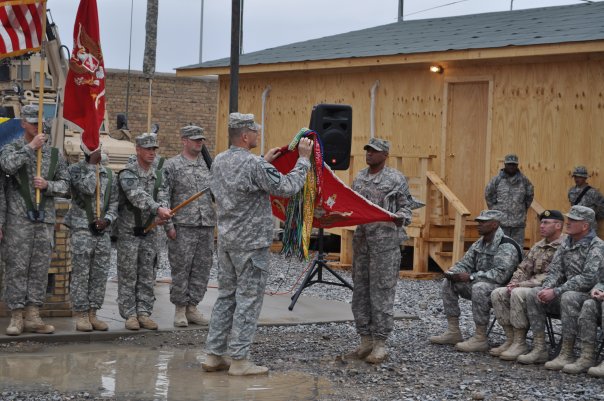
The 20th Engineers again deployed to Afghanistan in October 2012 to conduct combat, route clearance, and construction missions; then redeployed to Fort Hood in July 2013.
From the forests of the Ardennes, to the shores of Morocco and Omaha Beach, to the jungles of Vietnam's Central Highlands, to the mountains of Korea, to the wildlands of the US northwest, to the sands of Iraq, to the mountains of Afghanistan, the 20th Engineers has always answered America's call to arms. It stands trained and ready to respond to our country's next crisis.
Build and Fight!